Leo Najo: Early Mexican-American Professional Baseball Player and Texas League Star (1899–1978)
By: Frank Jackson
Published: March 20, 2026
Updated: March 23, 2026
Leonardo Alaniz, an early Mexican-American professional baseball player better known as Leo Najo, was born Leonardo (or Leandro) Alanís on January 20, 1899, to Maria del Rosario Alanís in La Lajilla in the northern Mexico state of Nuevo León. During his youth, baseball was establishing itself as the most popular sport in northern Mexico (the first documented game of baseball in Mexico was played in Matamoros in 1868). About 1908 he moved to Mission, Texas, where his mother operated a tavern. Mission remained his home for the rest of his life. He attended Catholic school at Our Lady of Guadalupe Church and Mission public schools but never graduated high school. Baseball had become popular in the Rio Grande Valley after the game was introduced by soldiers stationed at Fort Brown in Brownsville and Fort Ringgold in Rio Grande City.
Standing 5’9” and weighing 144 pounds, Najo became known for his speed. His adopted surname is explained as a derivative of conejo, the Spanish word for “rabbit.” Often batting leadoff, he was frequently on base and excelled at stealing. Primarily a center fielder, he was a sure-handed fly-chaser given to acrobatic catches. In 1918 Najo was a founding member of a Mission semi-pro team called the 30-30s (named after Winchester’s popular .30-30 rifle). The team’s roster eventually included longtime South Texas congressman Kika de la Garza and future Dallas Cowboys coach Tom Landry. In the early 1920s Najo split his playing time with Mexican winter league teams and semi-pro teams on both sides of the border. Among others, he played for the Cuauhtemoc Brewery team in Monterrey, Mexico, and the Milmo National Bank team in Laredo, Texas.
First Mexican-born Texas League Player and First Mexican-born Major League Draft Pick
In 1923 Najo attracted the attention of a scout from the San Antonio Bears, the city’s Texas League team. The team’s nickname was a play on words, as San Antonio was the seat of Bexar County. Najo was signed to a contract and began his professional career with the Bears in 1924. After a slow start with the Bears, he was transferred to the Tyler Trojans of the East Texas League. It was a drop from Class A to Class D, the lowest level in organized baseball, but during the rest of the season, Najo managed 150 hits in 392 at bats, good for a .383 batting average, among the best in the league. Together with veteran (forty-two years old) George Jackson, who hit .371, Najo led the Trojans to a record of 83–37 and a league championship.
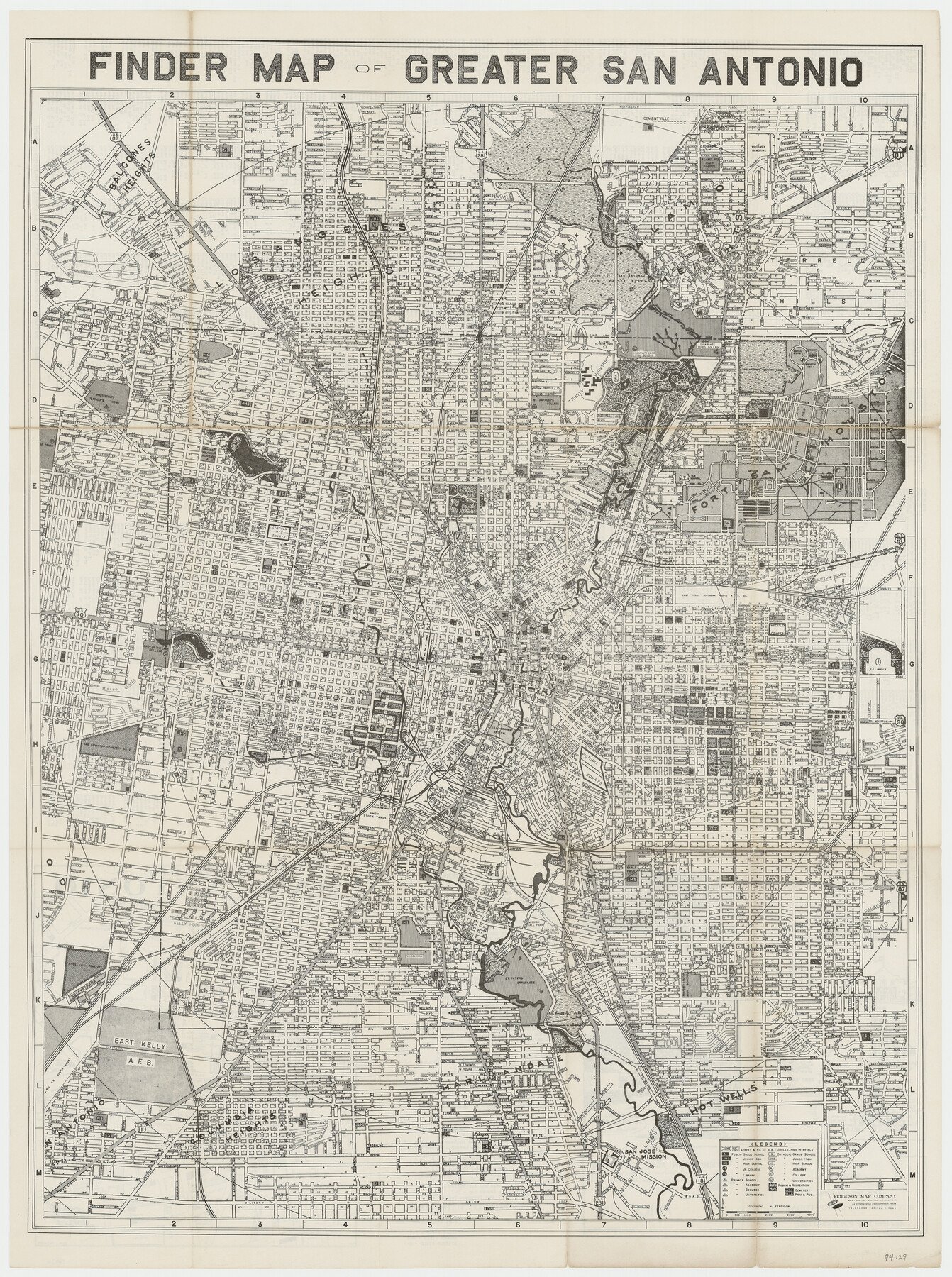
In 1925 Najo spent most of the season with the Okmulgee Drillers of the Class C Western Association. He led the league in home runs (thirty-four) and runs scored (195) while batting .356. At season’s end he returned to the San Antonio Bears, then in their first year at League Park (popularly known as Bear Park or the Den), near the Brackenridge Park Golf Course. Thanks to his dynamic playing, Najo soon attracted a following, particularly in the city’s heavily Hispanic West Side. He was thought to be one of the first, if not the first, Mexican-born players in professional baseball, and he is acknowledged as the first to play for a San Antonio professional team, as well as the first to play for a Texas League team.
In late 1925 the Chicago White Sox drafted Najo and invited him to spring training in Shreveport. The first Mexican-born player to be drafted by a major league team, he was cut before the season began. Najo returned to San Antonio, where he was enjoying another good season with the Bears before an outfield collision with teammate Ping Bodie, a veteran of nine major league seasons who outweighed him by roughly fifty pounds, left him with a broken leg and ended his season.
Post-injury Minor League Career
Nevertheless, Najo was back on the San Antonio roster in 1927 and 1928. During the latter season he set a longstanding Texas League record for most putouts (twelve) in one game. He also played three seasons (1929–31) for Omaha of the Western League. During that time, he batted .316, .335, and .353, respectively, before returning to San Antonio to finish out the 1931 season.
In 1932 Najo returned to the Western League, this time with the Tulsa Oilers, a Pittsburgh Pirates affiliate. With a 98–48 record, the Oilers easily won the league championship. In 2001, when Minor League Baseball compiled a list of the 100 greatest minor league teams of the twentieth century, the 1932 Tulsa Oilers were ranked number eighty-three. In 1933 the Oilers moved to the Texas League, where they remained through 1965.
Najo batted .323 in 113 games for Tulsa after arriving from San Antonio. He was one of the major contributors to the team’s success, though at thirty-three years old, he was one of the oldest players on the roster. Only catcher Tony Rego, the first major league player born in Maui, was older. Had Najo been a younger man, his 1932 season might have inspired Pittsburgh to bring him to the big leagues in 1933. However, the Pirates, who were coming off a second-place finish and already had two future Hall of Famers, the Waner brothers, Paul and Lloyd, in their outfield, were not in the market for a minor-league veteran. The 1933 season did, however, see the debut of another center fielder, Baldomero “Mel” Almada of the Boston Red Sox, Major League Baseball’s first Mexican-born player.
Later Career
Because Najo was involved in a salary dispute with the Oilers (minor league salaries were falling amidst the Great Depression) and had business interests in Mission (his family’s tavern and rental properties), he temporarily retired from professional baseball after the 1932 season. He served as player–manager of the Mission 30-30s from 1933 to 1937.
In 1938, at age thirty-nine, Najo played with the McAllen Palms of the Texas Valley League, a Class D league that had been revived that year. He hit for a .354 average and led the league with twenty home runs. The league folded after the 1938 season. It was Najo’s last year as a full-time player, but his playing days were not quite over. As a player–manager, he played thirty-eight games for the Alijadores de Tampico of the Mexican League in 1939. The following year he managed a club in Puebla, Mexico, and in 1941 he appeared in five games for Mexico City’s Diablos Rojos. This was the end of Najo’s professional playing career. His official stats—which do not include his lengthy career as a semi-pro—included 1,527 hits in twelve seasons and a lifetime batting average of .321. In the field he accumulated 3,029 putouts. He continued as a player, manager, and even an umpire in semi-pro contests in Mission. Managing local teams into his fifties, he would occasionally send himself to the plate as a pinch-hitter.
Honors, Family, and Death
Because he never played big league ball, Najo was not well-known nationally, though he was something of a celebrity in South Texas and Mexico. In 1971 the city of Mission honored him by naming the street where he lived Leo Najo Street. The Mission High School baseball field was also named after him. That same year the Leo Najo Oldtimers Baseball Committee instituted an annual “Leo Najo Day” to commemorate South Texas baseball history and players. In 1939 Najo was one of the five inaugural inductees to the Mexican Professional Baseball Hall of Fame (Salón de la Fama del Beisbol Mexicano) in Monterrey. A plaque and relief of Najo was installed when the Hall of Fame building opened in 1973.
Najo was twice married—first to Lucy Herrera, then to Elida Garza. His union to Herrera produced no children. He and Garza were married on February 23, 1950, and together they had eleven children. Afflicted by cancer, Najo died in McAllen on April 25, 1978, after complications from gall bladder surgery. He was buried at Laurel Hill Cemetery in Mission. In 1988 he was posthumously inducted into the Rio Grande Valley Sports Hall of Fame.
Bibliography:
Baseball-Reference.com: Leonardo Alanís (https://www.baseball-reference.com/register/player.fcgi?id=najo--001leo), accessed March 12, 2026. David King, San Antonio at Bat: Professional Baseball in the Alamo City (College Station: Texas A&M University Press, 2004). Noe Torres, Baseball’s First Mexican-American Star: The Amazing Story of Leo Najo (Coral Springs, Florida: Llumina Press, 2006).
Time Periods:
The following, adapted from the Chicago Manual of Style, 15th edition, is the preferred citation for this entry.
Frank Jackson, “Alaniz, Leonardo [Leo Najo],” Handbook of Texas Online, accessed April 11, 2026, https://www.tshaonline.org/handbook/entries/alaniz-leonardo-leo-najo.
TID:
FALAN
- March 20, 2026
- March 23, 2026
This entry belongs to the following special projects:
Is history important to you?
We need your Support because we are a non-profit that relies upon contributions from our community in order to record and preserve the history of our state. Every dollar helps.
I Want to Help Support the Preservation of Texas History→






Share this entry on social media: