
The Handbook of Texas, a digital encyclopedia by the Texas State Historical Association (TSHA), offers free, comprehensive coverage of Texas history, from its earliest inhabitants to the present. With more than 28,000 entries written by historians and experts, the Handbook is continuously expanded through special projects, user suggestions, and scholarly research. Originally published in print in 1952, it transitioned online in 1999, making it one of the first freely accessible digital encyclopedias. Today, it includes thousands of images, videos, and interactive media, engaging millions of users worldwide. Through collaboration with historians and institutions, TSHA ensures the Handbook remains a trusted resource for students, educators, and researchers dedicated to preserving Texas history.
Explore Entries by Topic:
Use one of these options to help narrow your search through our extensive collection of entries.
Trending Handbook Entries:
Our entries are accessed thousands of times per day from all over the globe. This week's Top 12 Handbook of Texas entries include:
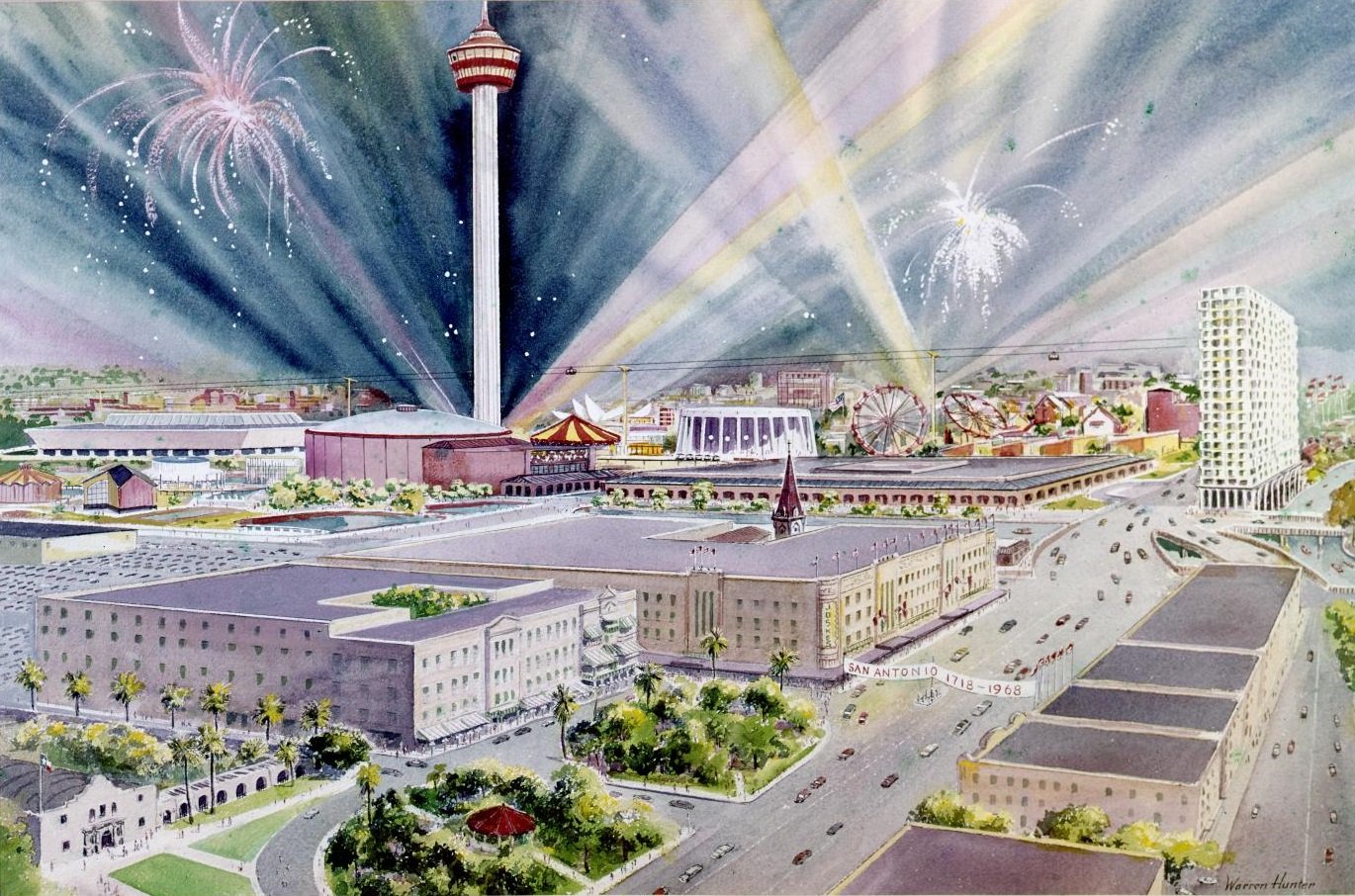
HemisFair '68, held in San Antonio from April 6 through October 6, 1968, was the first officially designated international exposition in the Southwestern United States. The fair, which commemorated the 250th anniversary of the founding of San Antonio, had its beginnings in 1959, when local business leaders, inspired by merchant Jerome K. Harris, started discussing a fair to celebrate the cultural heritage shared by San Antonio and the nations of Latin America—a "Hemis-Fair," as Harris then called it. The idea was endorsed by San Antonio congressman Henry B. Gonzáles. By 1962, when San Antonio Fair, Incorporated, a nonprofit organization, was formed, the aim was a "Fair of the Americas." William R. Sinkin was the first president; a prominent downtown construction magnate, Henry B. Zachry, was named chairman of the board. Two years later, in December 1964, Marshall Steves became president.
Dooley Wilson, actor and musician, was born Arthur Wilson in Tyler, Texas, on April 3, 1886. Some sources list 1894 as the year of his birth, but Wilson's gravestone gives 1886. Wilson's career spanned more than forty years. He began at age twelve with performances in vaudeville as a minstrel player. Around 1908 he performed in black theater in Chicago and New York. It was during this time that he got his nickname, "Dooley," as a performer in Pekin Theatre in Chicago. The name was taken from "Mr. Dooley," Wilson's signature song at the time. During the 1920s he led his own band—the Red Devils—in which he performed as a singing drummer on a nightclub tour of Paris and London. He returned to the United States in 1930 and gave up his drums for an acting career. He performed with Orson Welles and John Houseman in Federal Theater productions and then landed a Broadway role in the musical Cabin in the Sky.
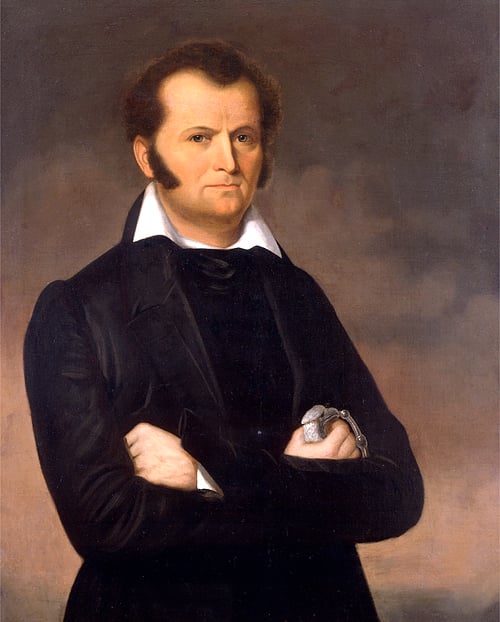
James Bowie was born near Terrapin Creek (now Spring Creek) where it crosses Bowie's Mill Road (Turnertown Road), nine miles northwest of Franklin, Logan County (now Simpson County), Kentucky, probably on April 10, 1796. He was the son of Reason (or Rezin) and Elve Ap-Catesby Jones (or Johns) Bowie. In 1794 Reason Bowie had moved his family from Tennessee to Logan County, where he farmed and operated a gristmill with the help of eight slaves. In February 1800 he moved to Madrid, in what is now Missouri. On May 2, 1801, at Rapides, Louisiana, Reason Bowie and his brothers David, Rhesa, and John swore allegiance to the Spanish government. In October the families settled on farms in what is now Catahoula Parish. There Reason's sons, James, John J., Stephen, and Rezin P. Bowie, grew to manhood. The family took an active part in community affairs and the elder Bowie reportedly became the largest slaveowner in his locale, with twenty slaves. About 1809 the Bowie clan moved to the Atakapa country in southeastern Louisiana; there Reason purchased 640 acres on the Vermilion River near the mouth of Little Bayou. He then developed a plantation near Opelousas, where he grew cotton and sugarcane, raised livestock, and bought and sold slaves. Reason Bowie died there around 1821.
Mance Lipscomb, guitarist and songster, was born Bowdie Glenn Lipscomb, in the Brazos bottoms near Navasota, Texas, on April 9, 1895. He was the son of Charles and Jane Lipscomb. Mance lived in the Brazos valley most of his life as a tenant farmer. His father was an Alabama slave who acquired the surname Lipscomb when he was sold to a Texas family of that name. Lipscomb dropped his given name and named himself Mance when a friend, an old man called Emancipation, died. Lipscomb and Elnora, his wife of sixty-three years, had one son, Mance Jr., three adopted children, and twenty-four grandchildren.
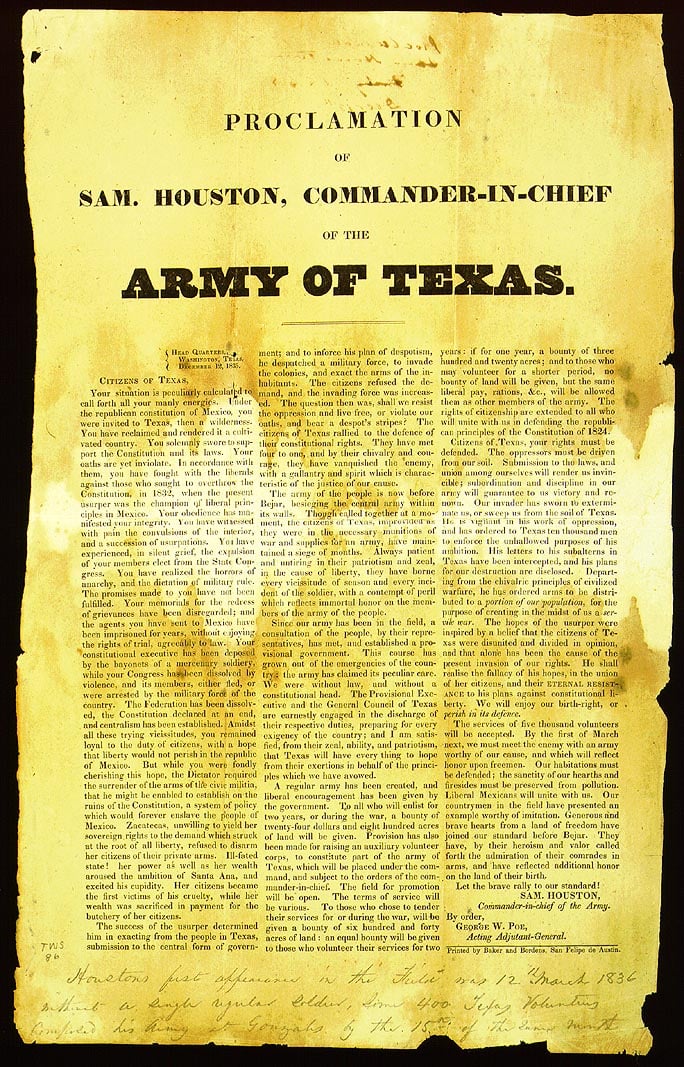
The Texas Revolution began in October 1835 with the battle of Gonzales and ended on April 21, 1836, with the battle of San Jacinto, but earlier clashes between government forces and frontier colonists make it impossible to set dogmatic limits in terms of military battles, cultural misunderstandings, and political differences that were a part of the revolution. The seeds of the conflict were planted during the last years of Spanish rule (1815–21) when Anglo Americans drifted across the Neutral Ground and the eastern bank of the Red River into Spanish territory, squatted on the land, and populated Spanish Texas. More alarming than these illegal residents, who only wanted to "settle and stay," were filibusters such as Philip Nolan, who commandeered portions of Spanish lands for personal gain and political capital. During the fading years of New Spain, its ruling council, the Cortes, worried about securing their far northern frontier and began to encourage foreign immigration to Texas, including Anglo American colonization. One who was eager to take advantage of a change in Spanish policy was Moses Austin, who received a commission from the Spanish governor of Texas to bring 300 families and establish a colony, thereby rebuilding some of his lost fortune associated with the Panic of 1819. Upon his death in 1821, his son and heir Stephen Fuller Austin fulfilled his father's vision and became the first empresario of Texas.
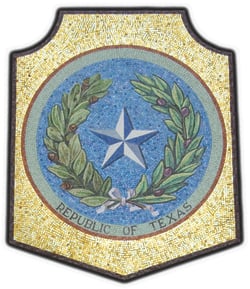
In the fall of 1835 many Texans, both Anglo-American colonists and Tejanos, concluded that liberalism and republicanism in Mexico, as reflected in its Constitution of 1824, were dead. The dictatorship of President Antonio López de Santa Anna, supported by rich landowners, had seized control of the governments and subverted the constitution. As dissension and discord mounted in Texas, both on the military front and at the seat of the provisional government of the Consultation at San Felipe, the colonists agreed that another popular assembly was needed to chart a course of action. On December 10, 1835, the General Council of the provisional government issued a call for an election on February 1, 1836, to choose forty-four delegates to assemble on March 1 at Washington-on-the-Brazos. These delegates represented the seventeen Texas municipalities and the small settlement at Pecan Point on the Red River. The idea of independence from Mexico was growing. The Consultation sent Branch T. Archer, William H. Wharton, and Stephen F. Austin to the United States to solicit men, money, supplies, and sympathy for the Texas cause. At New Orleans, in early January of 1836, the agents found enthusiastic support, but advised that aid would not be forthcoming so long as Texans squabbled over whether to sustain the Mexican constitution. They then proceeded to Washington and separated: Wharton remained in the capital, Archer went to Richmond, and Austin headed for New York City.

Singer Selena Quintanilla Perez, known simply as Selena, the daughter of Abraham and Marcella (Perez) Quintanilla, Jr., was born on April 16, 1971, in Lake Jackson, Texas. She married Christopher Perez, guitarist and member of the band Selena y Los Dinos (slang for "the Boys") on April 2, 1992. They had no children. Selena attended Oran M. Roberts Elementary School in Lake Jackson and West Oso Junior High in Corpus Christi, where she completed the eighth grade. In 1989 she finished high school through the American School, a correspondence school for artists, and enrolled at Pacific Western University in business administration correspondence courses.
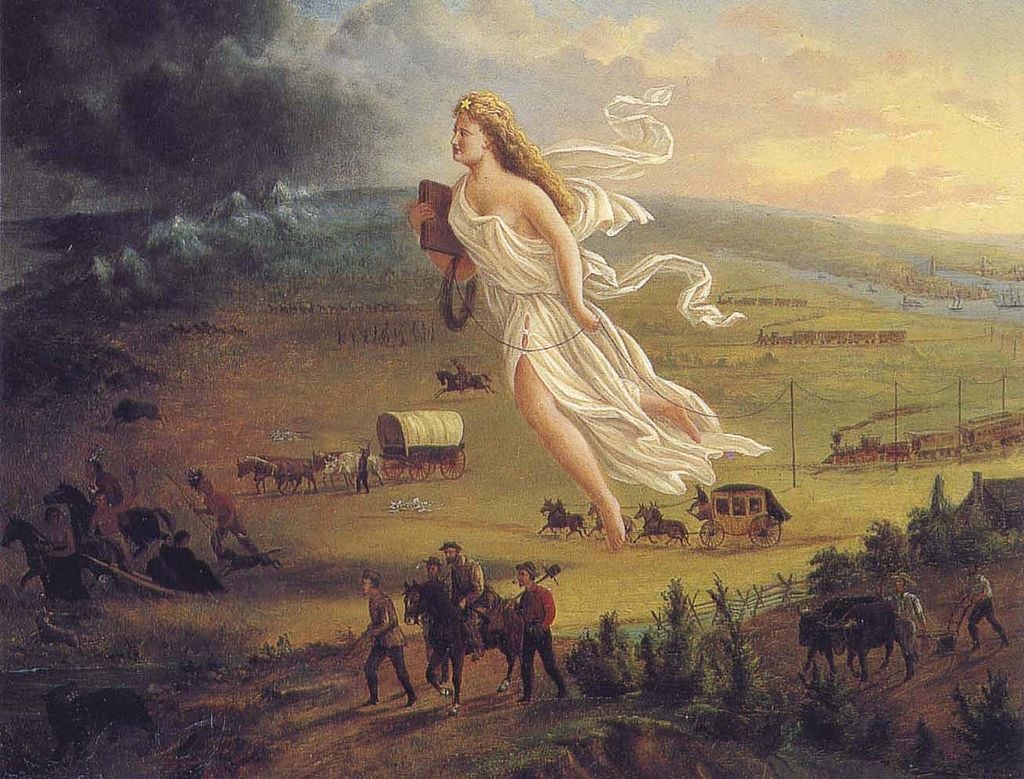
Anglo-American colonization in Mexican Texas took place between 1821 and 1835. Spain had first opened Texas to Anglo-Americans in 1820, less than one year before Mexico achieved its independence. Its traditional policy forbade foreigners in its territory, but Spain was unable to persuade its own citizens to move to remote and sparsely populated Texas. There were only three settlements in the province of Texas in 1820: Nacogdoches, San Antonio de Béxar, and La Bahía del Espíritu Santo (later Goliad), small towns with outlying ranches. The missions near the latter two, once expected to be nucleus communities, had been or were being secularized (i.e., transferred to diocesan from Franciscan administration), while those near Nacogdoches had been closed since the 1770s. Recruiting foreigners to develop the Spanish frontier was not new. As early as the 1790s, Spain invited Anglo-Americans to settle in Upper Louisiana (Missouri) for the same reason. The foreigners were to be Catholic, industrious, and willing to become Spanish citizens in return for generous land grants. Spain expected the new settlers to increase economic development and help deter the aggressive and mobile Plains Indians such as the Comanches and Kiowas. Mexico continued the Spanish colonization plan after its independence in 1821 by granting contracts to empresarios who would settle and supervise selected, qualified immigrants.
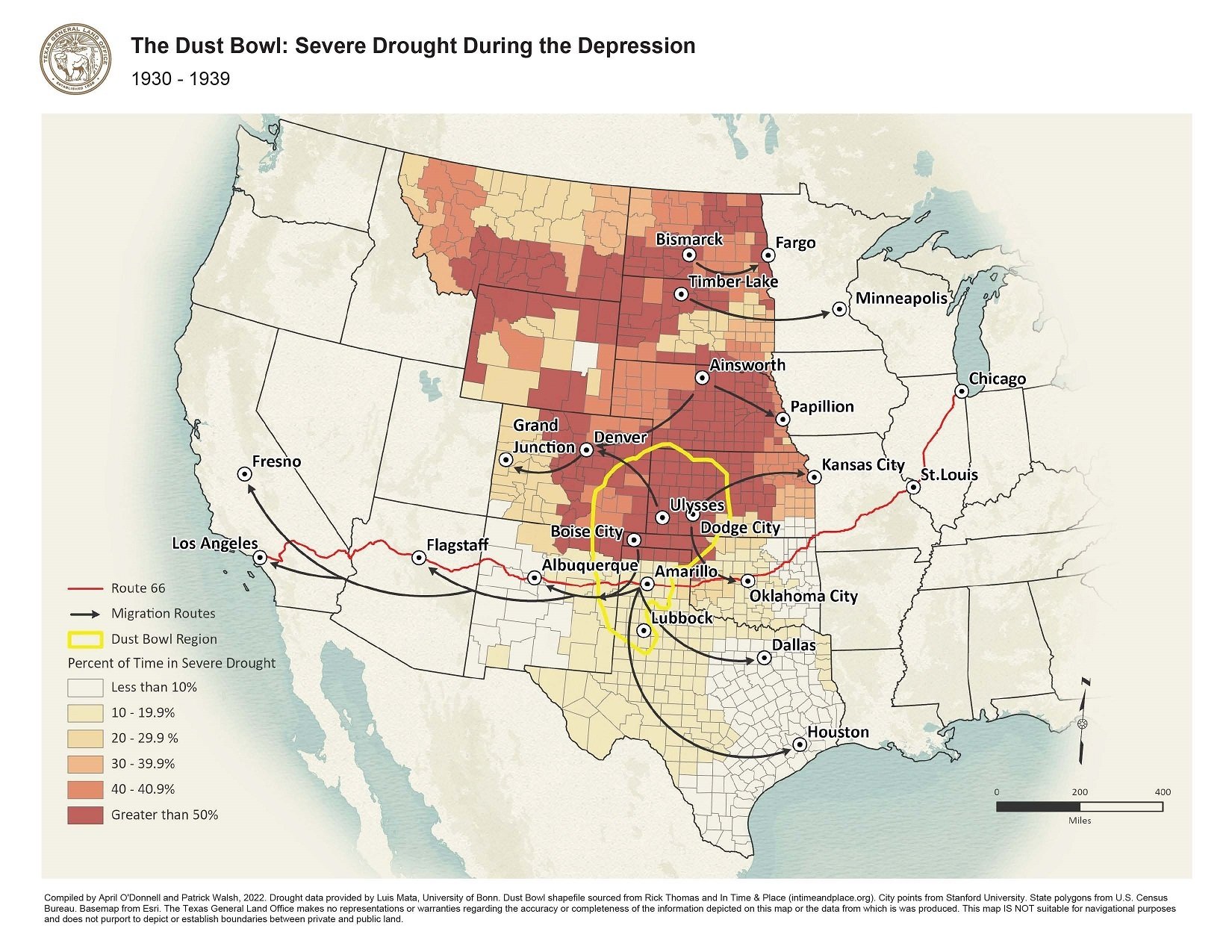
In the latter half of the 1930s the southern plains were devastated by drought, wind erosion, and great dust storms. Some of the storms rolled far eastward, darkening skies all the way to the Gulf and Atlantic coasts. The areas most severely affected were western Texas, eastern New Mexico, the Oklahoma Panhandle, western Kansas, and eastern Colorado. This ecological and economic disaster and the region where it happened came to be known as the Dust Bowl.
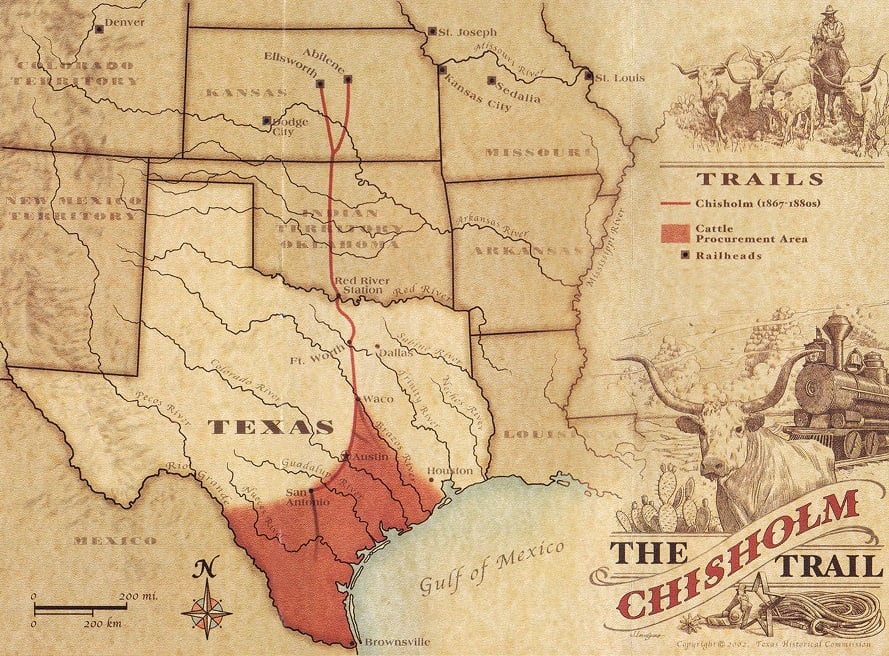
The trail popularly known as the Chisholm Trail was one of several routes used by Texas drovers to move livestock north to markets in Kansas after the Civil War. Its historic period of use as a cattle trail was from the summer of 1867 to 1884. After the cattle market opened at Dodge City by the summer of 1876, much of the herd traffic diverted from this trail route to the Western Trail, also known as the Fort Griffin and Dodge City Trail, to head for the newer markets in Kansas and in neighboring states and territories.
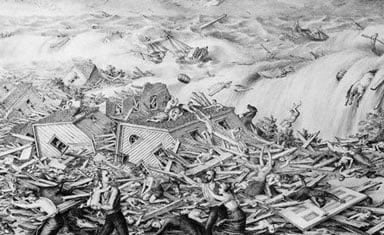
In Galveston on the rain-darkened and gusty morning of Saturday, September 8, 1900, newspaper readers saw, on page three of the local Daily News (see GALVESTON NEWS), an early-morning account of a tropical hurricane prowling the Gulf of Mexico. On the previous day Galveston had been placed under a storm warning by the central office of the Weather Bureau (now the National Weather Service) in Washington, D.C. A one-column headline announced, "Storm in the Gulf." Under that, a small subhead proclaimed, "Great Damage Reported on Mississippi and Louisiana Coasts-Wires Down-Details Meagre." The story, only one paragraph long, had been sent out of New Orleans at 12:45 A.M. that same day, but it added nothing to the information presented in the headlines. Additional details were unavailable "owing to the prostration of the wires." Beneath the New Orleans report appeared a brief local story: "At midnight the moon was shining brightly and the sky was not as threatening as earlier in the night. The weather bureau had no late advice as to the storm's movements and it may be that the tropical disturbance has changed its course or spent its force before reaching Texas."
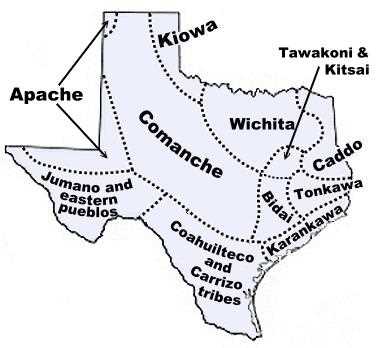
The word texas (tejas, tayshas, texias, thecas?, techan, teysas, techas?) had wide usage among the Indians of East Texas even before the coming of the Spanish, whose various transcriptions and interpretations gave rise to many theories about the meaning. The usual meaning was "friends," although the Hasinais applied the word to many groups-including Caddoan-to mean "allies." The Hasinais probably did not apply the name to themselves as a local group name; they did use the term, however, as a form of greeting: "Hello, friend." How and when the name Texas first reached the Spanish is uncertain, but the notion of a "great kingdom of Texas," associated with a "Gran Quivira" (see QUIVIRA) had spread in New Spain before the expedition of Alonso De León and Damián Massanet in 1689. Massanet reported meeting Indians who proclaimed themselves thecas, or "friends," as he understood it, and on meeting the chief of the Nabedaches (one of the Hasinai tribes) mistakenly referred to him as the "governor" of a "great kingdom of the Texas." Francisco de Jesús María, a missionary left by Massanet with the Nabedaches, attempted to correct erroneous reports about the name by asserting that the Indians in that region did not constitute a kingdom, that the chief called "governor" was not the head chief, and that the correct name of the group of tribes was not Texas. Texias, according to Jesús María, meant "friends" and was simply a name applied to the various groups allied against the Apaches. Later expeditions by the Spanish for the most part abandoned the name Texas or else used it as an alternative to Asinay (Hasinai). Official Spanish documents continued to use it but later narrowed it to mean only the Neches-Angelina group of Indians and not a geographic area. Other putative meanings have less evidence from contemporary accounts to support them: "land of flowers," "paradise," and "tiled roofs"-from the thatched roofs of the East Texas tribes-were never suggested by first-hand observers so far as is known, though later theories connect them with tejas or its variant spellings. Whatever the Spanish denotations of the name Texas, the state motto, "Friendship," carries the original meaning of the word as used by the Hasinai and their allied tribes, and the name of the state apparently was derived from the same source.
Delivered on Sundays. A free service of the Texas State Historical Association (TSHA).
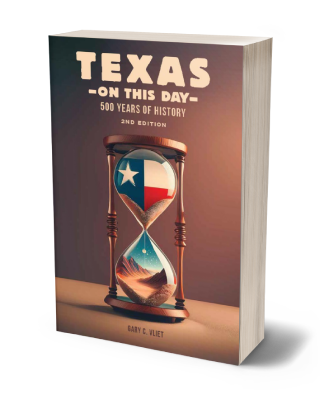
Unlock Texas History, One Day at a Time! Dive into 500 years of Texas history with Gary Vliet’s engaging daily reader, Texas on this Day. An expanded second edition is now available!
Get your copy today!Texas On This Day
Find out what happened on any given date in Texas history with our Texas Day By Day.
188 years ago today:
Keelboat reaches "raft on the Colorado"
105 years ago today:
Majestic Theatre opens in Dallas
73 years ago today:
Leading Texas woman made first secretary of HEW
Most Recent Handbook Entries:
Every one of our entries is written, fact-checked, and reviewed by historians. Our newest additions to the Handbook of Texas include:
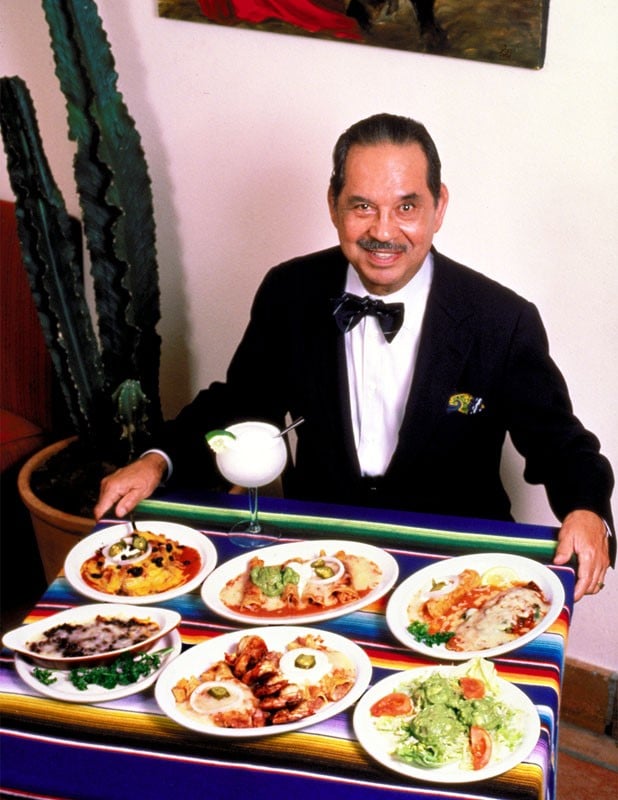
Matt Gayton Martinez, Sr., restaurateur, was born on June 4, 1917, in Texas. He was the son of Delfino Martinez and Magdalena (Gonzalez) Martinez and grew up in Austin. According to family history, Delfino Martinez had fought in Pancho Villa’s army and later fled to Texas where the family eventually settled in Austin, and he opened El Original restaurant, credited as Austin’s first Tex-Mex restaurant in 1925. While the restaurant opened, young Matt Martinez was already involved in the food business and sold tamales along Congress Avenue near the state Capitol. As a youth, he also operated a paper route.
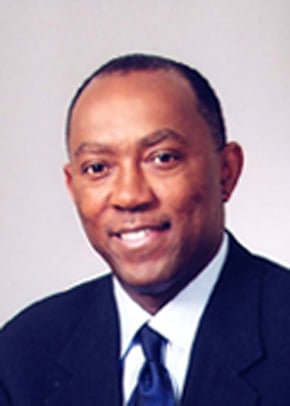
Sylvester Turner, attorney, Texas legislator, Houston mayor, and U.S. representative, was born on September 27, 1954, in Houston. His father, Eddie Turner, was a painter, and his mother, Ruby Mae (Lewis) Turner, a maid at the Rice Hotel. Turner grew up in a large family and was raised in the Acres Homes area in the northwest part of the city. He graduated in 1973 from Klein High School, where he was valedictorian. Turner earned his bachelor's degree in political science at the University of Houston in 1977 and his law degree from Harvard Law School in 1980. After law school, he returned to Houston and began practicing law at Fulbright and Jaworski before starting his own practice with Barry M. Barnes—Barnes and Turner—in 1983. On March 26, 1983, Sylvester Turner married Cheryl D. Gillum. They had a daughter, Ashley Paige, but divorced in 1996.
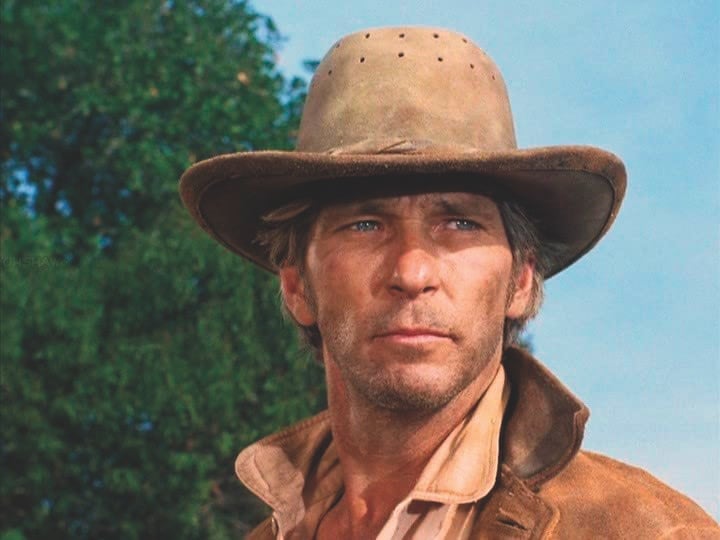
Justice Ellis McQueen, Jr., a character actor and director better known as L. Q. Jones, was born on August 19, 1927, in Beaumont, Texas, to Justice Ellis McQueen, Sr., a Kansas City Southern Railroad switchman, and Jessie Paralee (Stephens) McQueen. In 1931 his mother died of injuries that she suffered in an automobile accident. McQueen and his father were in the fatal crash but only suffered minor injuries. After his mother’s death, McQueen was raised by various relatives, including his uncle and aunt, Noah and Juanita Purcell, of Port Neches. He attended Port Neches High School and graduated in 1945, then studied at Lon Morris College in Jacksonville, Texas. McQueen enrolled at the University of Texas, where he was on the cheerleading squad and a member of Alpha Phi Omega and Phi Kappa Sigma. While in college, he also worked as a comedian, performing more than 800 shows for students and service members. Before graduation, while he was still a senior, Justice Ellis McQueen, Jr., married fellow college student Neta Sue Lewis on October 8, 1950, at Westminster Presbyterian Church in Austin. They later had three children—Randy, Steve, and Mindy—but divorced in 1979.
Leonardo Alaniz, an early Mexican-American professional baseball player better known as Leo Najo, was born Leonardo (or Leandro) Alanís on January 20, 1899, to Maria del Rosario Alanís in La Lajilla in the northern Mexico state of Nuevo León. During his youth, baseball was establishing itself as the most popular sport in northern Mexico (the first documented game of baseball in Mexico was played in Matamoros in 1868). About 1908 he moved to Mission, Texas, where his mother operated a tavern. Mission remained his home for the rest of his life. He attended Catholic school at Our Lady of Guadalupe Church and Mission public schools but never graduated high school. Baseball had become popular in the Rio Grande Valley after the game was introduced by soldiers stationed at Fort Brown in Brownsville and Fort Ringgold in Rio Grande City.
The Texas-Oklahoma League (T-O League) was a Class D minor baseball league with teams primarily located in North Texas and southern Oklahoma. The league held its first season in 1911 with four teams in Texas (Wichita Falls, Cleburne, Bonham, and Gainesville) and four in Oklahoma (Durant, Ardmore, Altus, and Lawton). It was the only season to begin with bi-state parity. In subsequent seasons, Texas teams were predominant.
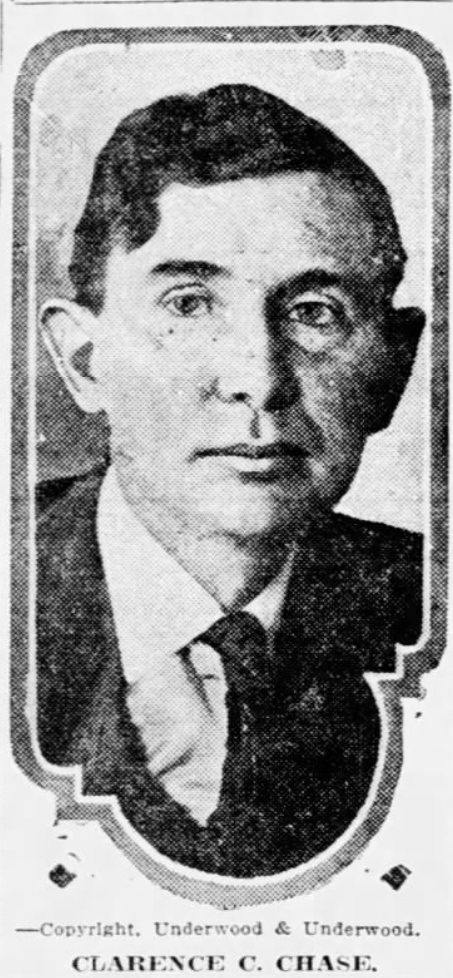
Clarence Cornell Chase, businessman and U.S. collector of customs who was involved in the infamous Teapot Dome oil scandal, was born on June 23, 1881, in West Concord, Dodge County, Minnesota, to parents Clarence Jay Chase and Phoebe Townsend (Greene) Chase. He had three siblings and two half siblings. Little is known about his early life or his formal education. The 1900 federal census listed Chase still living with his family in Dodge County, Minnesota, and working as a clerk. Within a few years he had relocated to the Southwest and was in El Paso, Texas, and became involved in the mining interests of his uncle, New York millionaire William Cornell Greene. Clarence C. Chase married Alexina Fall in El Paso on October 24, 1906; they later had six children, one of whom died at birth. A newspaper article in the Nashville Banner detailing the wedding stated, “Mr. Chase is the nephew of Col. W. C. Greene and is now in charge of Col. Greene’s mining interests in Chihuahua.” His wife Alexina was described as “the charming and accomplished daughter of Judge and Mrs. A.B. Fall.” Albert B. Fall was a longtime prominent New Mexico politician who would be one of the first of two senators elected to the United States Senate from New Mexico in 1912.
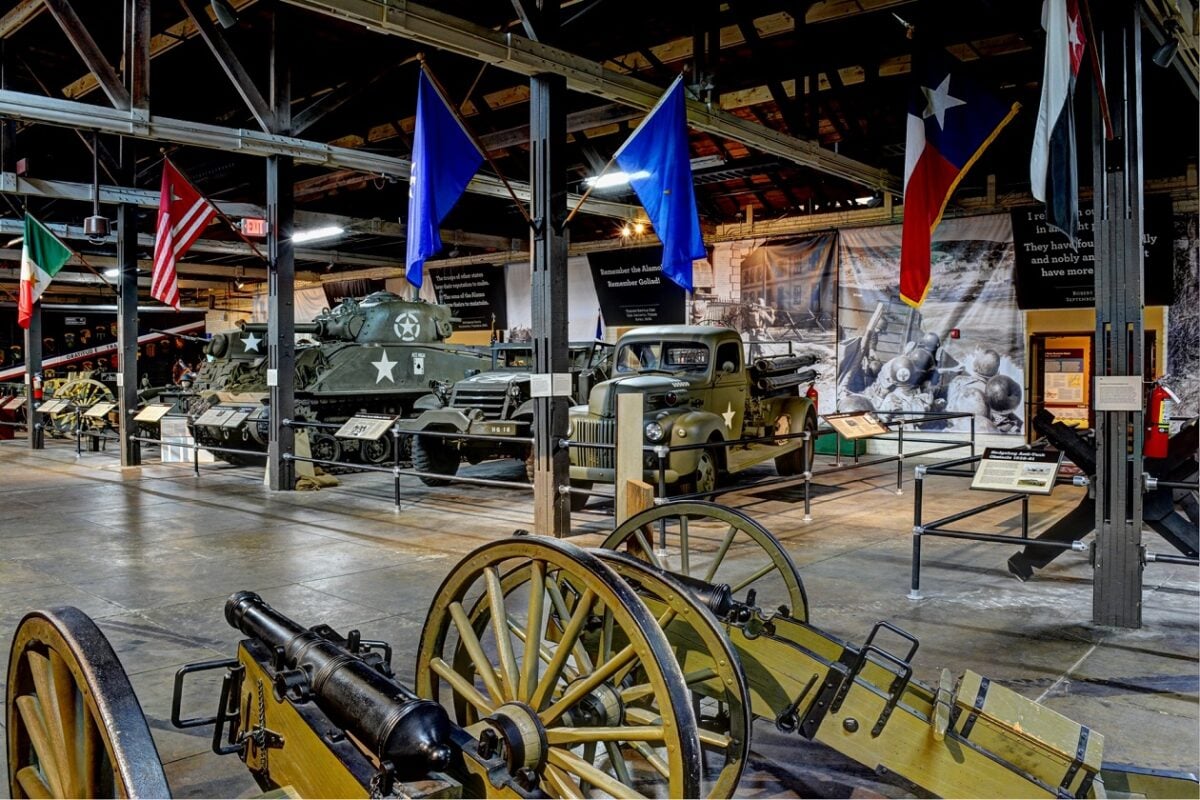
The Texas Military Forces Museum, located at Camp Mabry in Austin, Texas, honors and tells the story of the Texas military forces from 1823, when the first ranging companies of volunteers were mustered, to the present-day Texas National Guard and Texas State Guard. The museum originated from an idea by the Texas adjutant general, Maj. Gen. Willie L. Scott, in 1986 when he suggested that the historical artifacts owned by the Texas National Guard should have their own home and be viewable by the public. He tasked Brig. Gen. John C. L. Scribner, the command historian for the Texas National Guard, to establish a museum without any additional state funding. Scribner began soliciting monetary donations, archival materials, and historical artifacts for the future museum. In 1980 a museum Hall of Honor program was also initiated to recognize “outstanding military service and leadership of individuals” as members of the State Guard, Army National Guard, and Air National Guard.
Neques was a chief of the Tonkawa Indians in Texas in the eighteenth century. While very little is documented about his life, records indicate that he was a proponent of peace with the Spanish who inhabited Texas during this time. His stance led to his indirect participation in the 1771 peace council that was organized by Athanase de Mézières.
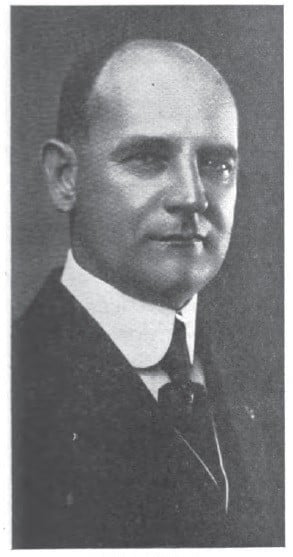
Porter Fred Loring, funeral director, businessman, philanthropist, and civic leader, was born in Canton, Illinois, on August 15, 1876. He was the son of Fred J. Loring and Mary Grace (Breed) Loring. The family was living in San Antonio, Texas, by the 1890s. At the age of twenty-three, on August 22, 1899, Loring married Rosa Lee Smith in San Antonio. On August 15, 1910, the couple welcomed son Porter Jr., but he died a day later. They divorced prior to 1926, and Loring married Pauline Otto on September 18, 1926. They had a son, Porter Jr., in 1928 and a daughter, Dorothy Pauletta, in 1933.
Gransot was a leader of the Taovayas people, a group of Wichita Indians who lived on the Red River. Unlike his successor, Guersec, Gransot’s life was not well-documented and had only brief mention in Spanish documents before his death. The Spanish referred to him as the “Great Chief,” while Guersec was referred to as “Little Chief.” However, when Guersec took over, he was then called the “Great Chief,” a title the Spanish called the main leader of the Taovayas.
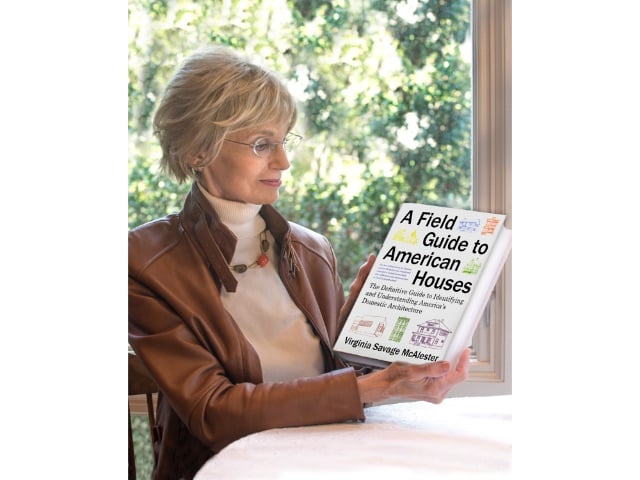
Virginia McAlester, architectural historian, was born Virginia Wallace Savage to Dorothy Minnie (Harris) Savage and Wallace Hamilton Savage on May 13, 1943, in Dallas, Texas. Wallace Savage was a lawyer and mayor of Dallas from 1949 to 1951. Virginia Savage had one younger sister, Dorothy Harris “Dotsy” Savage. Virginia Savage graduated from the Hockaday School in 1961 and studied architecture at Radcliffe College and Harvard University. After earning her bachelor of arts degree and graduating with honors from Radcliffe College in 1965, Savage moved back to Dallas. On November 25, 1965, she married Clement McCarty Talkington, a vascular surgeon, in Dallas. Together they had two children: Clement McCarty Talkington, Jr., and Amy Talkington, a filmmaker. The couple divorced in early 1977, and Savage married Arcie Lee McAlester, a geology professor at Southern Methodist University, on July 11 later that year.
The Texas Association was a short-lived (four seasons) minor baseball league during the 1920s. The league was rated Class D. It had six franchises every season, but only Austin, Corsicana, and Mexia were present for all four seasons.
Join Us in Preserving & Sharing Texas History with the World!
The Handbook of Texas is one of the nation’s largest digital history resources—freely accessible to millions each year.
Encyclopedia entries on Texas history
Readers explore the Handbook each year
Students & educators served annually
Your support ensures this knowledge remains free and accessible to everyone.
Explore Ways to Support →A program of the Texas State Historical Association.
Special Projects
Through collaboration with historians and institutions, TSHA ensures the Handbook remains a trusted resource for students, educators, and researchers dedicated to preserving Texas history.
Dallas-Fort Worth
The tremendous growth of the Dallas-Fort Worth metroplex from the 19th through 21st centuries far outpaced the recorded history of this economically vital area. Texas is often associated with its rural ranching history, yet as the decades passed, the cultural and economic identities of Lone Star State evolved to reflect the increasing importance and influence of the urban areas. No area in Texas illustrates this transformation better than DFW—a well-traveled location during the cattle trailing and early railroad eras that blossomed into a modern financial and cultural hotspot in the present day. We need a more complete documentation of the DFW metroplex, and the Texas State Historical Association (TSHA) seeks to correct this imbalance in the historical record.
Texas Medicine
Texans lay claim to a dynamic medical history. The state has borne witness to deadly disease outbreaks, the establishment of world-renowned medical institutions, and the discovery of new therapeutics and cures. From the first documented surgery on Texas soil by Cabeza de Vaca in the sixteenth century to the innovative research spearheaded by university laboratories to develop vaccines and therapeutics for COVID-19, the medical story of Texas is reflective of the many ways Texans have engaged to protect and promote their health and well-being. Today, the healthcare industry represents a significant share of the Texas economy, contributing more than $108 billion to the state’s GDP, according to data from the Bureau of Economic Analysis. Yet, despite the fundamental role medicine has played in shaping the growth and development of the state, a comprehensive and authoritative medical history of Texas remains unfulfilled. With the development of the Handbook of Texas Medicine, TSHA proudly presents a unique opportunity to address this disparity.
Texas Women
The Handbook of Texas Women project strives to expand on the Handbook of Texas by promoting a more inclusive and comprehensive history of Texas. Texas women make Texas history, and TSHA wants to significantly recognize the various ways women have shaped the state’s history at home, across the state, nationally, and abroad. The impacts of women on Texas history are often overlooked, and as more and more people are accessing information using smartphones, tablets, and other mobile technologies, this project will seize upon the unprecedented opportunities of the digital age in order to reshape how Texas women’s history will be understood, preserved, and disseminated in the twenty-first century.

Texas Music
What is it about Texas music? Trying to define it is like reviewing a dictionary. There is way too much detail to try to pin it down. However, this much is clear: Texans have given American music its distinctive voice, and that's no brag, just fact.
Tejano History
The TSHA is proud to announce the launch of the Handbook of Tejano History, which contains more than 1,200 entries, including 300 new entries, detailing the critical influence of Tejanos on the Lone Star State. Released on March 29, 2016, to commemorate the fourth anniversary of the Tejano Monument unveiling on the Capitol grounds in Austin, the Handbook of Tejano History is the culmination of a two-year effort involving dozens of researchers, educators, students, and Texas history enthusiasts committed to capturing and sharing Tejano contributions to Texas life and culture. Originally conceived in partnership with the board of directors of the Tejano Monument, Inc., the Association’s Handbook of Tejano History joins a number of other important initiatives born out of the legacy of the Tejano Monument, including the Tejano History Curriculum Project and Austin Independent School District’s Cuauhtli Academy/Academia Cuauhtli.
African American Texas
African Americans have been part of the landscape of Texas for as long as Europeans and their descendants. Spanning a period of more than five centuries, African American presence began in 1528 with the arrival of Estevanico, an African slave who accompanied the first Spanish exploration of the land in the southwestern part of the United States that eventually became Texas. While African Americans have been subjected to slavery, segregation, and discrimination during this long history, they have made significant contributions to the growth and development of Texas. They have influenced Texas policies and social standards. Living and working with other ethnic groups, they have helped create a unique Texas culture. Historians have not always acknowledged the role that African Americans have played in the Lone Star State. Although numerous studies of Texas’s past appeared in the twentieth century, until 1970 there remained too many empty pages in the history of the state concerning the black population. This situation has changed since the 1970s, but the need to capture more of the African American experience still exists. For this reason, we are happy to launch the Handbook of African American Texas.
Civil War Texas
At 4:30 on the morning of April 12, 1861—one hundred and fifty years ago this spring (2011)—Confederate States of America artillery opened fire on United States troops in Fort Sumter, South Carolina, beginning the American Civil War. Texans, who had voted overwhelmingly in February 1861 to secede from the Union and then watched their state join the Confederacy in March, thus became involved in a four-year conflict that would take the lives of many and leave none untouched. Texas escaped much of the terrible destruction of the war for a simple reason—United States troops never managed to invade and occupy the state’s interior. In sum, the Civil War exacted a huge price, primarily in terms of lives lost and ruined in the Confederate Army and in the privations of those left at home. However, the conflict had two vitally positive results for Texas: It freed the state’s more than 200,000 enslaved people, and it destroyed the curse of the ‘Peculiar Institution’ for the entire society of the Lone Star State.
Houston
The Texas State Historical Association and the Houston History Alliance (HHA) are proud to announce the launch of the Handbook of Houston, which contains more than 1,250 new and existing entries highlighting the significant impact Houston has had on the state, the nation, and the world. Launched on March 2, 2017, the Handbook of Houston is the culmination of many years of historical research.
Handbook Help Topics
Whether you have questions about submitting your work or want to know more about the process these links will help guide you.
- Contact Handbook Staff
- Format and Style Guide
- Subject Category Descriptions
- Author Information
- Image Use Disclaimer
- Frequently Asked Questions (FAQ)
- Author Agreement Form
- Author Exit Survey
- To suggest a new topic, report an error, propose a new entry, or request an entry revision please use our contact page and select Handbook of Texas staff.